
Each year, equal pay day falls somewhere in August. That’s around 50 days extra a woman must work to earn the equivalent of a man’s average wage at the end of the financial year on June 30. The gender pay gap is a measure of male wages vs. women’s wages.
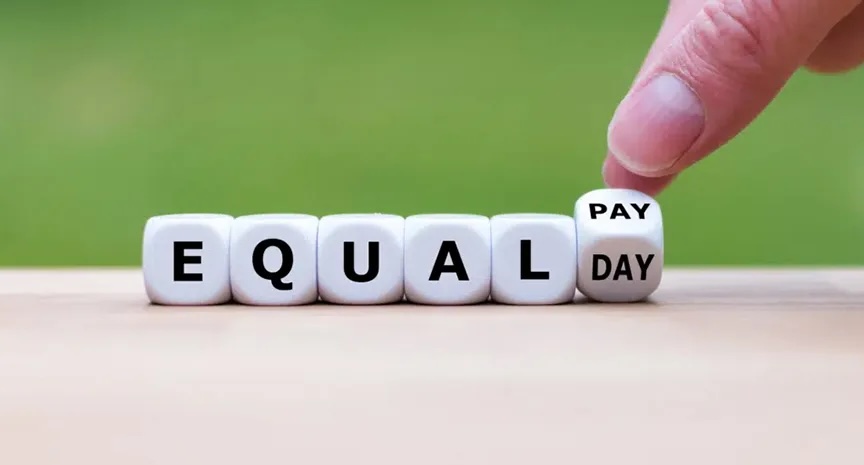
The notion of equal pay was won by unions in Australia back in the 1970s, when women were finally entitled to equal pay for equal-value work (and no longer paid a percentage of a man’s equivalent wage – yes that used to be a thing!). In spite of gains over the decades, women’s wages still fall short.
Measuring the gender pay gap, however, gives us a better picture of how and why women still earn less on average than men. And it’s largely to do with undervaluation of the work done mostly by women.
The gender pay gap in 2024 was 22 per cent – that means for every dollar a man earned, women earned just 78 cents. We need to work faster to close this gap and be able to achieve a fairer and more inclusive society.
So, why is there still a gender pay gap?
Women workers have historically been undervalued, but participation in the workforce has been steadily growing and now women make up almost half (compared to just 30 per cent in the 1960s).
There have been many myths in the past about why women are paid less overall than men. These include statements like: “women have the same opportunities as men but choose different (lower-paid) roles”, or “women choose to spend time at home with babies”, and so on.
But the real causes are varied and wide-ranging. Here are some of the obstacles to women earning higher wages:
- Women face discrimination in the hiring process,
- Female-dominated industries and sectors attract lower pay (compare early education sector educators’ wages to construction workers’ earnings, for example),
- Many jobs lack flexibility and are not family-friendly,
- There are high rates of part-timers among women workers,
- Many women have caring responsibilities that interfere with work

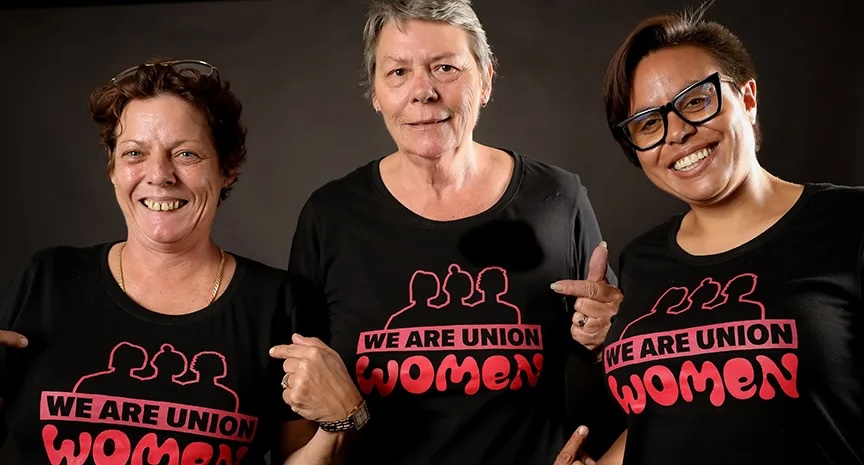
“It’s so great to have a female-led industry being recognised as having real qualifications and actually being more than just ‘baby-sitters’.”
“We are educators who help develop children in their first five years, which is just so crucial for them.
“So, it’s actually nice to finally be recognised for what we’re trying to do here.”
– Paige Taylor, early childhood educator and proud UWU member.
How is the gender pay gap measured?
There’s more than one way to measure the gender pay gap.
The government’s Workplace Gender Equality Agency (WGEA) was set up by Labor to investigate the position of women in the workforce. WGEA offers the most broad and accurate picture. In 2024, WGEA reported the pay gap at 21.7 per cent, revealing that the average women’s wage is about 80 per cent of the average male wage.
The Australian Bureau of Statistics (ABS) 2024 figures, however, measure it differently, putting the gap at just 12 per cent. How can their figures be so different? One reason is that women to an unfair share of unpaid work.
Women are more likely to work part-time
ABS figures compare only full-time wages of men and women. They do not take into account part-time, casual, and fixed-term contract workers – or company bonuses mostly paid to men. We know women are overrepresented in casual and part-time work because it offers the flexibility many women need to balance care commitments and unpaid labour outside work hours.
Casual and part-time work tend to be less secure, lower paid and less likely to offer career progression. While company bonuses are mostly given to executives. Only a small percentage of CEOs are women. Career progression remains a barrier for women’s earnings.
The worst offenders are now named and shamed
WGEA reported on the public sector for the first time in 2023. As of 2024, every company in the private sector with more than 100 workers must report how they’re tracking against their gender equality policy.
The banks come out on top as the worst performers on equal pay. NAB performs the best out of the big four but is still three times worse than the recommended range.
Even with laws requiring companies to be transparent about what they pay women vs men, only 55 per cent of companies undertook a payroll analysis against their equal pay policies. Only one in three companies met the recommended target range.
Unionised sectors perform better on closing the gap
The public sector performed significantly better with a gap of 13.5 per cent. As this sector is unionised, we know that through enterprise bargaining we can achieve workplace policy changes that promote equal pay.
The super pay gap means women are retiring in poverty
Women in low-paid and insecure work remain a significant driver for the gender pay gap. The less you earn over your career, the less super you accumulate over your working life.
The risk of homelessness among women over 55 is growing faster than any other group.
Unions created the superannuation system to ensure a dignified retirement for workers. Not-for-profit industry super funds (that benefit members instead of shareholders) play a central role in the super industry.
But for women, the super gap means women retire with a third less in their super funds than men do. To change this, we need to promote gender equality across the workforce. One important way to do this is by supporting UWU’s campaign to raise the rate of employer super contributions – and ensuring super is paid on every dollar we earn.
Here’s what union campaigns have already won for women workers:
- Ensured the super guarantee rate increased to 12 per cent against Liberal lobbying to freeze it (and raid super early for housing and debt).
- 26 weeks government-funded Paid Parental Leave and flexible work policies to encourage more men to share career breaks to raise a family.
- Introduced super payments on government-funded Paid Parental Leave from January 2025.
- PayDay Super from 2026, whereby employers are required to pay super at the same time as salary and wages (instead of only being required to pay every 3 months). This long-fought change will significantly reduce super theft.
- Anti-discrimination and pay transparency laws that make it illegal for employers to treat employees unfairly based on gender.
- Fair Work Commission award review of the undervaluation of women workers (ongoing)
25 per cent pay increase for ECEC workers

What we’re campaigning for now:
- Raise the superannuation guarantee to 15 per cent
The guarantee is capped from 2025 onwards at 12 per cent. - Super on every dollar earned
Currently, super is paid only on your base salary and does not match your income when you account for penalty rates, overtime or loading on shift work. - Super for every worker
No matter where you work! Some casual employees and domestic workers are still not eligible for super payments, such as gig-economy workers. - Include super on employer-funded paid parental leave
Labor introduced super payments on government-funded paid parental leave starting from January 2025. Employers should do the same. - Less taxation on super for people on lower incomes
- Allowing First Nations workers to access their super at a younger age.