

AGED CARE MANDATORY CARE MINUTES HUB
The Care Minutes Hub has been created to provide you with a complete overview of Mandatory Care Minutes and the Aged Care Star Rating System.
Aged Care workers can use this webpage to learn about mandatory care minutes, what your provider should and should not be doing, how to find out the care minutes in your facility and take action to hold providers accountable to the mandatory care minutes.
What are care minutes and where did they come from?
Care minutes are the amount of direct care that older people living in residential care receive from:
- Registered nurses (RNs)
- Enrolled nurses (ENs)
- Personal care workers (PCWs) or Assistants in nursing (AINs) – also known as nursing assistants.
The care minutes responsibility is based on a sector-wide average of 215 minutes of care per resident per day, including 40 minutes of direct RN care.
Mandatory direct care minutes were introduced in response to the Royal Commission into Aged Care Quality and Safety. They ensure that older people in aged care homes receive the dedicated care time they need.
What should be counted as care minutes?
Direct care minutes will be determined from the hours provided by:
- Registered Nurse (RNs)
- Enrolled Nurse (ENs)
- Personal Care Workers (PCWs)
- Assistant in Nursing (AINs).
Care provided by both employees and agency staff will count towards the amount of direct care minutes.
Work done by the following staff does NOT count towards direct care minutes:
- allied health staff
- lifestyle and recreational staff
- clinical funding managers
- other aged care staff who work in:
- catering (including plating and serving)
- hotel services
- facility and room cleaning
- maintenance
- gardening.
What your provider should not be doing
Changes to care minutes should improve workloads and quality of care for residents.
However, with the implementation of mandatory care time minutes many aged care providers have been making changes in the workplace to try and get around providing the full amount of care minutes required.
This includes changes to rosters, duties, job roles and the creation of new jobs.
In some workplaces these changes have resulted in more duties for carers and fewer jobs for other staff.
Your employer SHOULD NOT be using tricks to meet the care minutes requirements.
This includes:
- Counting hours done by non-direct staff towards care minutes
- Changing the responsibilities of direct care staff to include work undertaken by non-direct care staff
- Merging roles to create hybrid direct care/non-direct care roles and count all hours undertaken towards care minutes
- Changing job titles and responsibilities to avoid fulfilling the required care minutes
- Requiring support staff to undertake a Cert III in aged care
If your provider is doing any of these things, please share your experience to help us hold your employer accountable!

Reporting the reality of aged care at your facility
If your employer is not meeting the care minutes or using manipulative practices such as adjusting rosters, titles or role responsibilities, increasing caregivers’ workloads instead of improving residents’ care, you can make an anonymous report to Aged Care Watch.
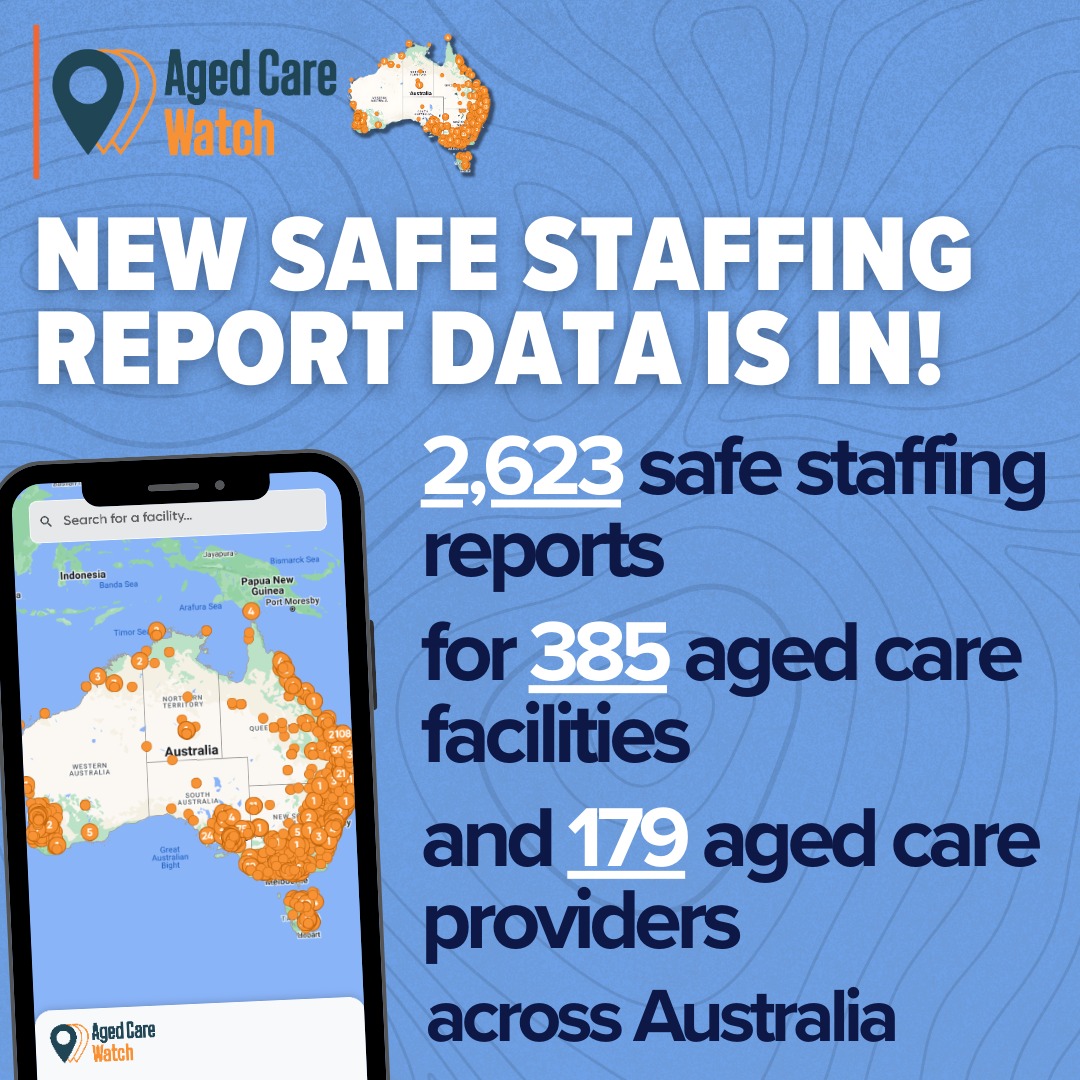
The United Workers Union developed Aged Care Watch as part of our national campaign to change aged care.
Aged Care Watch is a crowd-sourced reporting tool that allows aged care workers, residents, family, and community members to anonymously report on and publicly name facilities that implement insufficient care time and manipulative practices, holding them accountable.
The data collected from the reports is essential to lobby the government and help facilitate reform in the aged care sector.
In addition the data from Aged Care Watch will be provided regularly to the Aged Care Quality and Safety Commission.
the evidence we need to hold providers accountable
Aged Care providers are currently responsible for providing quarterly data to the government reporting on their care minutes for the quarter. This quarterly data is publicly available, and you can access this spreadsheet here to see what your provider has reported.
Thanks to your Safe Staffing reports on Aged Care Watch, we now have the clearest picture yet of what’s really happening inside aged care.
84% of reports rated staffing levels below 3 stars
1,683 reports identify 1 or more unfilled shifts
848 reports show workers completely unable to take their breaks while 742 reports show workers only able to take partial breaks.
86% of workers report having to rush through their tasks
60% of workers are forced to complete work outside their role
67% of reports said residents were not receiving minimum care.
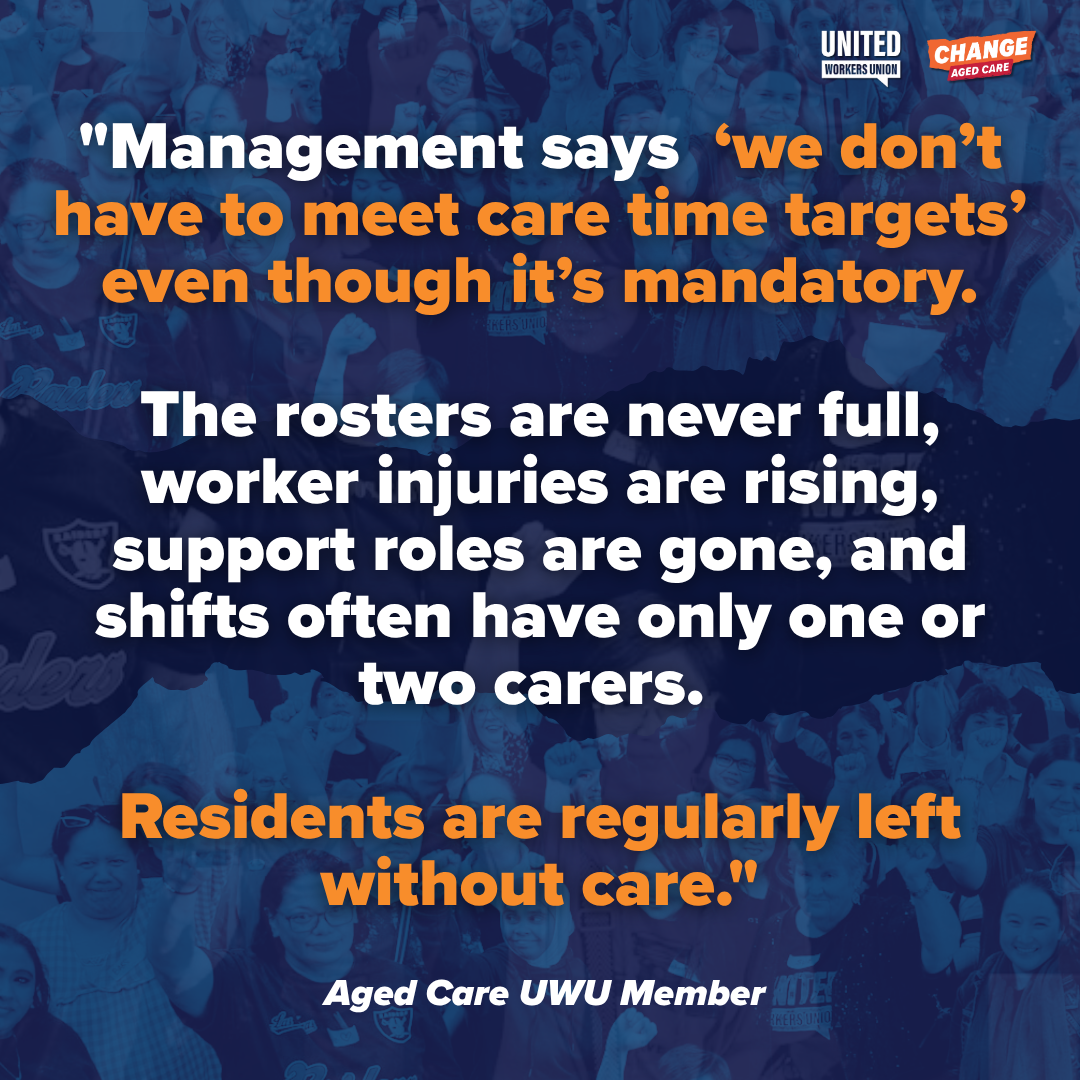
Thanks to United Workers Union aged care members revealing poor practice at their facilities, we now know which providers keep failing to meet their care minutes obligations.
This gap between provider claims and worker experience shows a systemic problem in aged care staffing and care time reporting.
Aged care providers are funded to provide the required care time, but many are falsifying their reported numbers.
It’s time we put an end to providers misrepresenting their care minute figures to boost their own profits!
By reporting regularly on Aged Care Watch you are not just exposing providers, but are providing the evidence needed to create change.
What is the star rating system and how does it work?
The quarterly care minutes data is used to generate the star rating that each aged care facility receives on the www.myagedcare.gov.au website.
The star rating system was a Royal Commission recommendation, developed to allow residents and their families to make genuine comparisons of the quality and safety performance of services and providers.
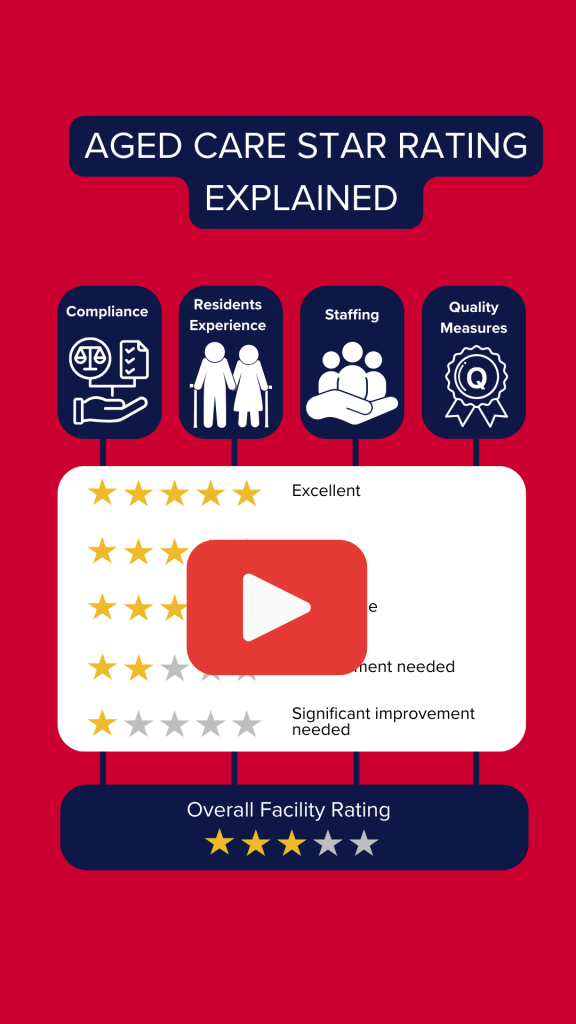
The star ratings measure performance of a facility across four key areas:
- Graded assessment of the facility against quality standards
- Performance against relevant clinical and quality indicators
- Staffing levels
- Resident and family surveys from current residents
Each facility is given a rating between 1 and 5 stars for the above areas. Then based on the results of this, the facility is given an overall facility star rating.
Rating System:
- star – Significant improvement needed
- stars – Improvement needed
- stars – Acceptable
- stars – Good
- stars – Excellent
You can explore the star ratings for each facility across Australia at the myagedcare.gov.au website.
What are the problems with the star rating system?
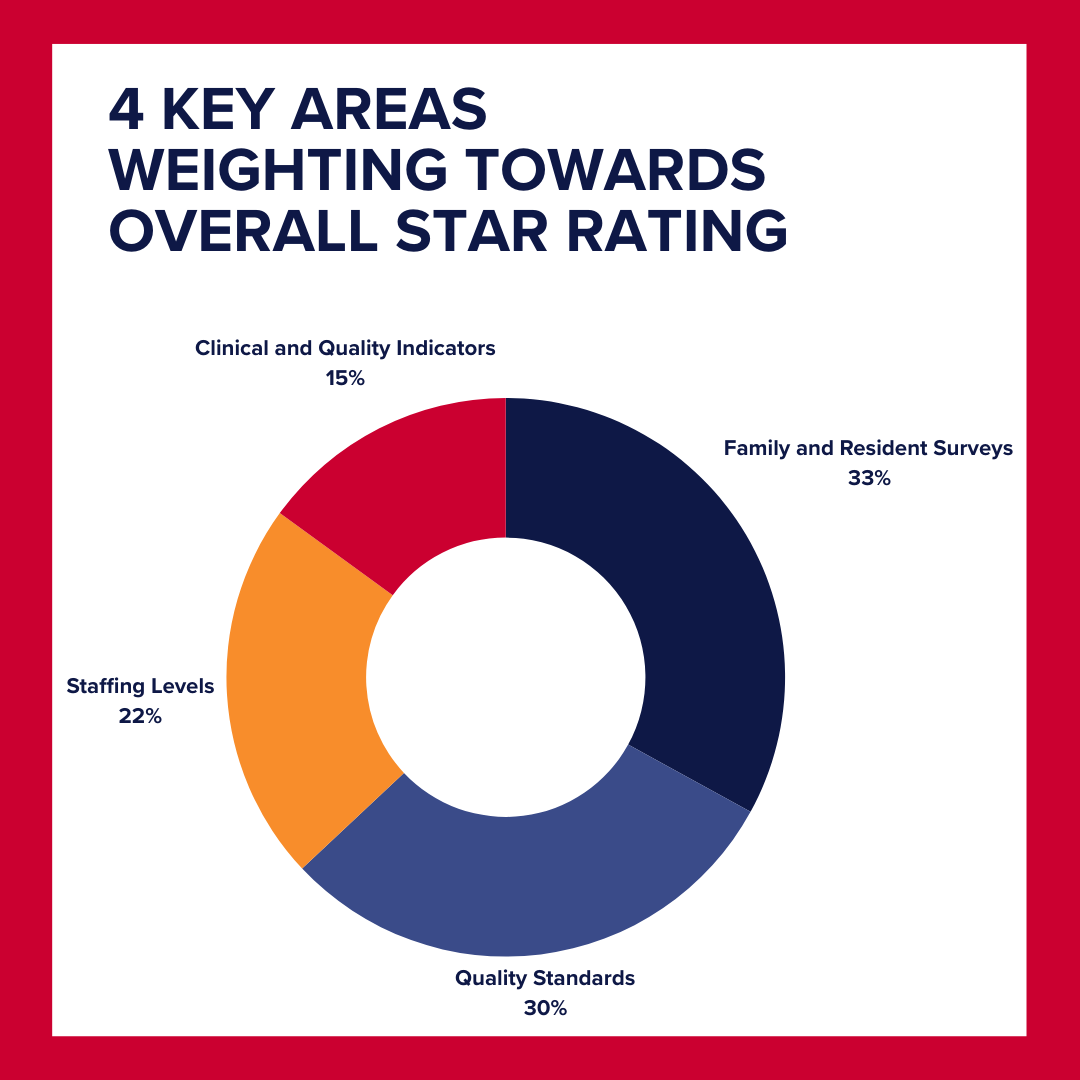
The star rating system has been designed so that each of the four key rated areas have been weighted differently.
- Graded assessment of the facility against quality standards (30%)
- Performance against relevant clinical and quality indicators (15%)
- Resident and family surveys from current residents (33%)
- Staffing levels (22%)
This weighting system allows providers to still get a good overall star rating despite not meeting their care minutes.
In the May 2024 quarterly data 42% of aged care facilities across the country were rated either a 1 or 2 for staffing, which means significant improvement needed or improvement needed. This issue is not reflected in the overall star ratings.
There are many examples of providers getting a 1 star rating for staffing but still an overall rating of 4. This is very misleading for families looking for care.
Staffing levels impact on both Quality measures and Resident experience and so we believe overall ratings should be capped if the staffing levels are not being met.
Providers should not be rewarded with higher ratings when they are not meeting acceptable staffing levels, and risking the safety of residents and of the workforce through higher workloads.
We are currently in discussions with the government about the problems with the star rating system and the changes needed to improve it.
breaking union win on care time
While at times it may feel like nothing is changing and speaking up won’t make a difference, your Safe Staffing reports on Aged care Watch are in fact gaining wider attention and helping to improve aged care.
The government has recently announced a major change to the aged care star ratings system. From 1 October, aged care homes cannot score an “acceptable” 3 star staffing rating unless they meet both their:
- legislated total care minutes
- 24/7 Registered Nurse minutes
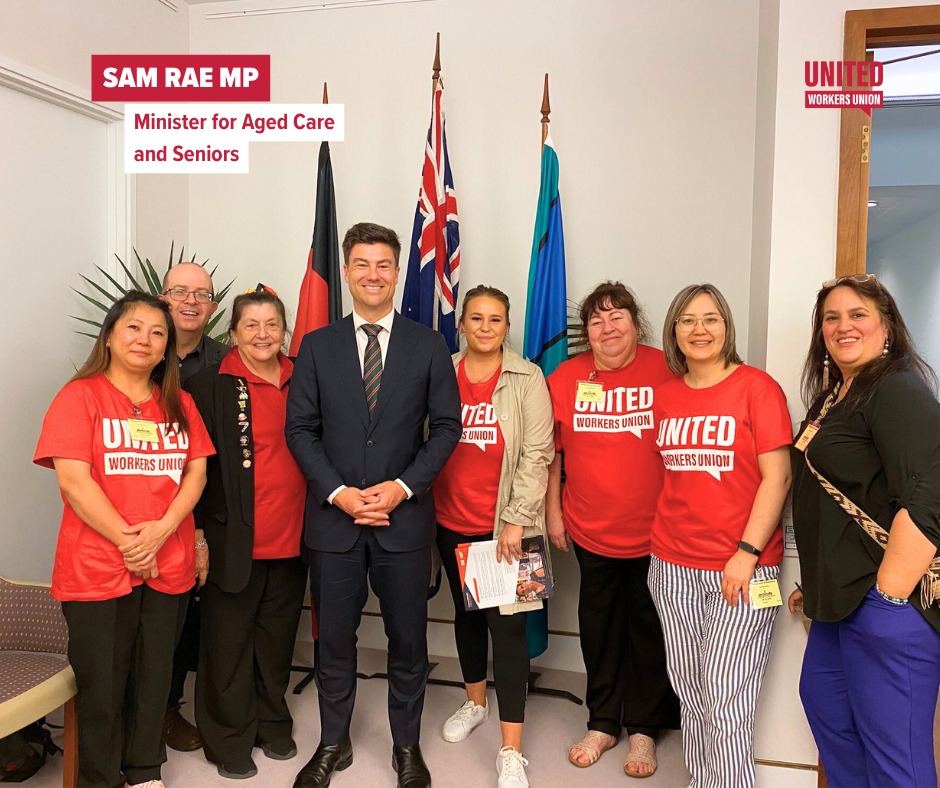
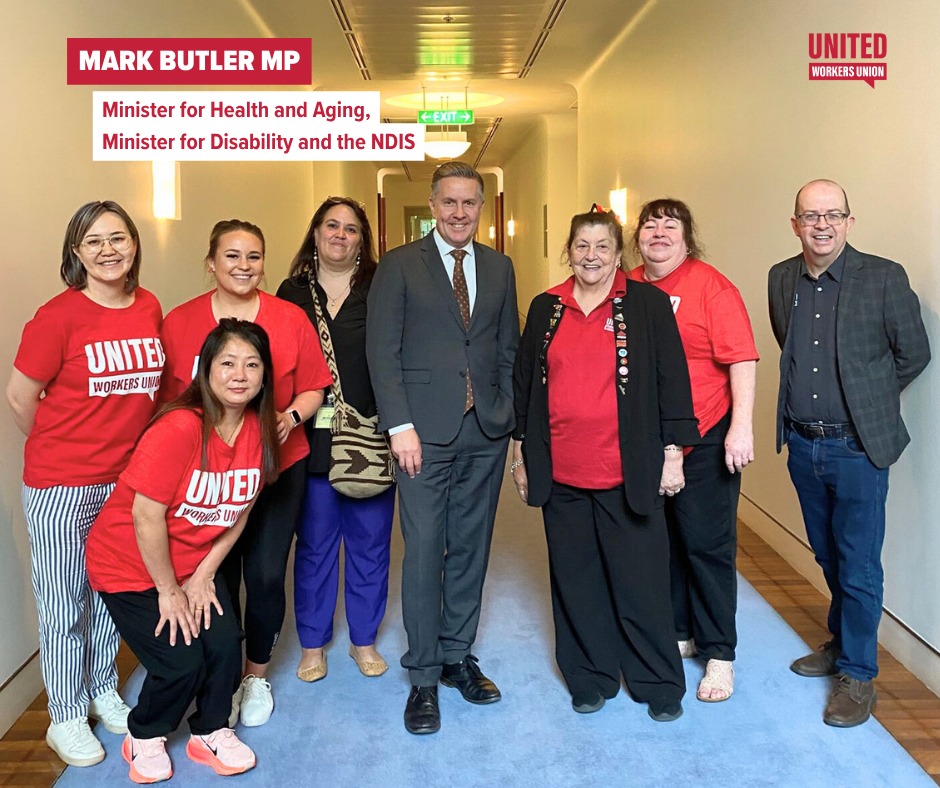
This is a huge union win and wouldn’t have been possible without UWU aged care members lobbying decision makers and discussing issues and solutions with the new Aged Care Minister!
It’s also proof that your Aged Care Watch reports continue to shine a spotlight on aged care, exposing chronic understaffing, missed RN minutes, and care minutes on paper that do not match what is happening on the floor.